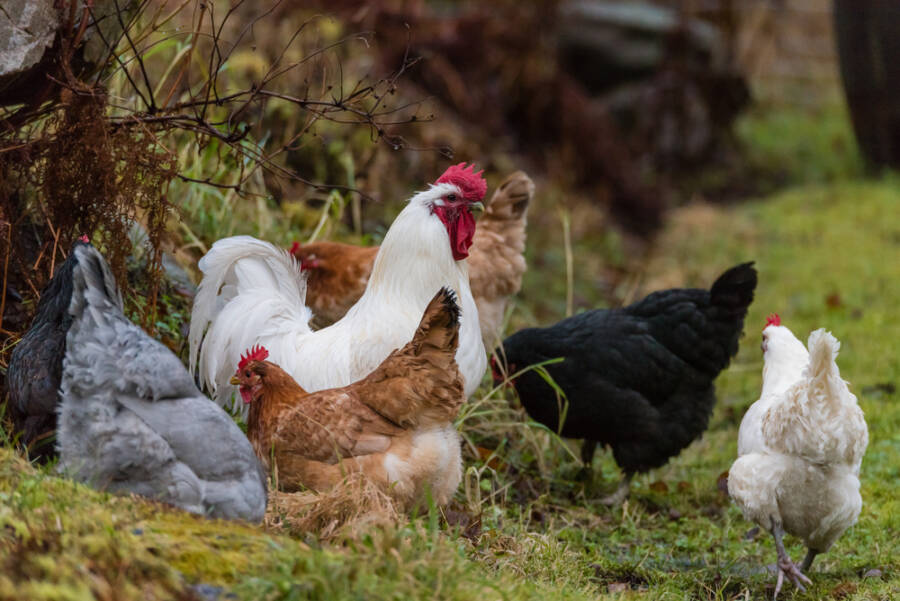
Selecting the right chicken coop plans can make owning your flock an enjoyable experience. But fail to plan and you will regret it. (First-hand experience speaking here—I’ve made almost every mistake in the book!)
Thankfully, there are some simple calculations you can use to make sure your hens have the room they need to be happy—and even include a little room for your flock to grow.
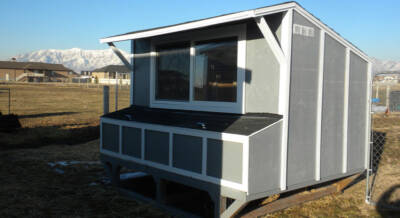
David Hess modified our “Gambrel Poultry” plan to make this beautiful coop.
Dimensions for Your Ideal Chicken Coop Plan
It’s important to make sure you have enough space, but not too much. Your hens need adequate ventilation and enough space to keep them from getting overheated in the summer.
Poultry industry experts typically recommend 1.5 to two square feet of floor space per chicken. However, for a small home flock, I prefer about four square feet per hen. This additional space provides extra space to walk through the coop and allows more time to pass before you need to clean the coop.
At the same time, you don’t want the coop too roomy if you live in a cold climate. If the coop is small enough, the chickens’ body heat will help keep it warm during cold winter nights.
Adequate Nesting Space
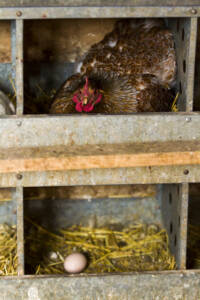
In a Penn State Extension article, Phillip Clauer recommends providing two nest boxes for the first two hens and one more box for every additional four hens.
The nest boxes should be about 12″ x 12″ with a lip at the front of the box so nesting material and eggs won’t get pushed out.
A Place to Perch
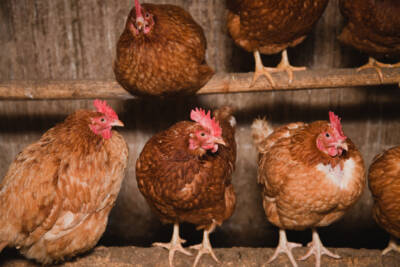
Chickens love to sleep on a perch well off the ground. You’ll also want to give your chickens a place to perch with 6″ of space for each bird.
Outdoor Space for Happy Hens
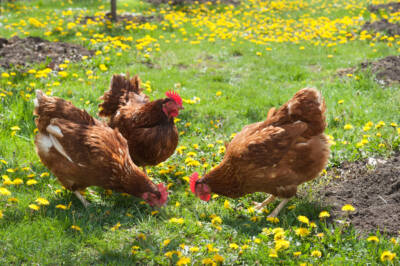
While they need a safe place from extreme weather and nighttime predators, your hens will be happiest if they have plenty of space to scratch, peck, and chase bugs.
If you need to keep your chickens in a closed run, plan on 8 to 10 square feet per hen. However, the ground in your run will quickly become dry dirt (or a muddy mess if it rains). Aged chicken manure is an excellent fertilizer, but needs to be used sparingly.
If you want to raise pastured chickens, you’ll need to make sure they have plenty of space. That means you need to limit your flock to about 80 chickens per acre. That means you’ll need to allocate 544 square feet of yard or pasture space per chicken.
If you’re in the market for chicken coop plans, be sure to check out the Homestead Larder Shop.
















 Choosing Materials for a New Fence
 We quickly added a single strand of nylon electric wire around the inside of the entire pasture about six inches off the ground and a second strand about the height of an adult goat’s nose. As soon as the electric wires went up, our herd knew this was one serious fence and it was time to find something else to do— like jump off the small cliff so conveniently provided inside their new pasture.
 Other Good Fencing Options
 A solid wooden fence is another option that will work— it’s just a bit more work to build and usually quite a bit more expensive than the wire and electric options mentioned above.
 Ranch panels— also sometimes called hog panels or cattle panels— can be a convenient fencing solution. They are strong and easy to put up. In fact, with a few panels and metal fence posts, you can have a decent pen in place within an hour.
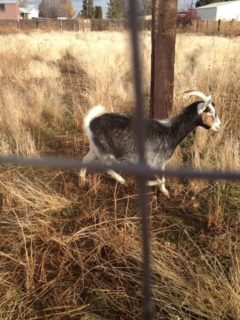
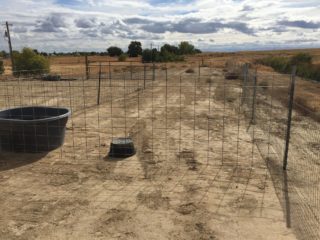 However, there are a couple of drawbacks. First of all, baby goats can easily leap through the holes in these panels. Secondly, goats of all ages love to stick their heads in anywhere they can jam them— and if you have a goat with horns, it’s very likely they will get stuck. This becomes a dangerous situation when a goat gets trapped in a fence on a hot, dry day when it needs to drink plenty of water to stay cool.
 In fact, if you have any goats with horns, you’ll want to make sure there is no fencing with large spaces between the wires or loose wire that their horns could become tangled in.
 More Information